Zoo 2: Animal Park
upjers GmbHAdventure
4.011.89K Reviews
- Version
- 16.0.3
- Installs
- 10.00M
- Age Rating
- Everyone
Screenshots
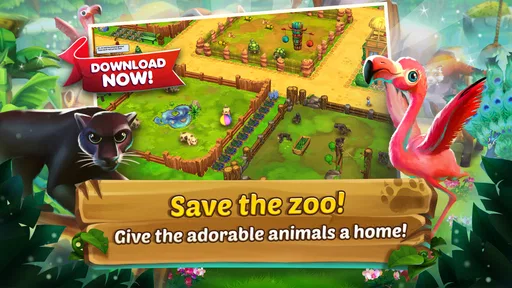
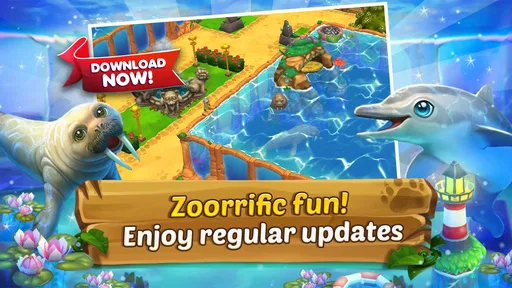
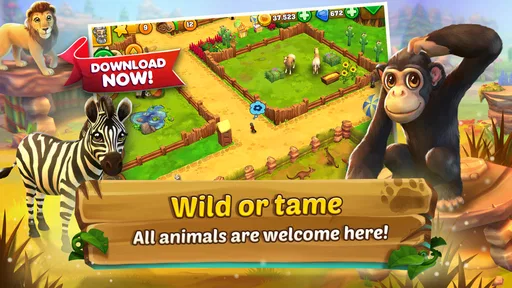
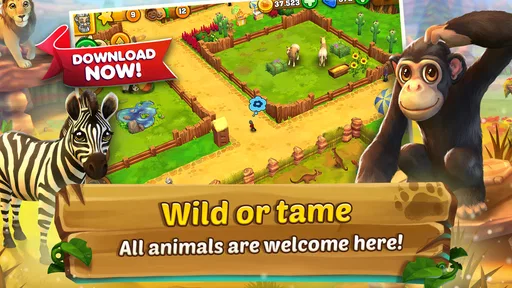
Our Review of Zoo 2: Animal Park
 Analysis by Appyee
I like zoo games best when they give me two satisfying ways to spend a session: a quick check-in to tend to the park, or a longer stretch for arranging things and working through goals. Zoo 2: Animal Park leans into both. It is an animal-focused adventure game from upjers GmbH, built around taking responsibility for a small zoo and gradually making it feel like your own. The appeal is gentle rather than dramatic: there are animals to care for, a park to shape, and quests to give each visit a purpose.
A practical rhythm for everyday play
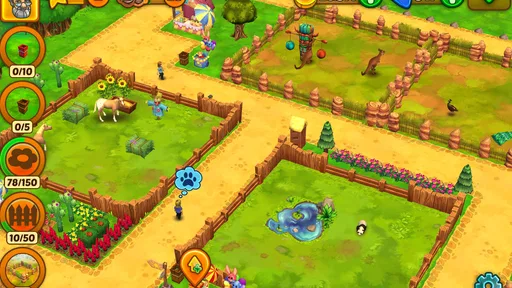
I’d approach the game as a series of small routines instead of expecting every session to be a big event. On a short visit, I would check what the current task asks for, look after the animals that need attention, and make one useful improvement rather than scattering resources across several ideas. When I have more time, I can focus on the creative side: reorganizing the park, considering how the enclosures and paths fit together, and choosing which expansion feels worthwhile next.
That distinction matters because a zoo builder can easily turn into a long list of chores if I try to do everything at once. A repeatable order—quest first, animal needs next, then a building or decoration decision—makes the play feel clearer. It also helps me notice when I’m only tapping through familiar actions without enjoying the design choices. If that happens, I’d pause the routine and save the next substantial change for a session when I can actually think about the layout.
Small decisions that make the park feel considered
The creative freedom is most satisfying when I treat each change as part of a larger plan. Instead of placing every new item wherever there is room, I’d leave myself a little space to imagine how a future enclosure or path might fit. That is a useful habit in a game where the park grows from a modest starting area: a layout that works for the first few animals may feel cramped once I begin opening more ground.
I also wouldn’t assume that decorating is merely cosmetic. A cohesive-looking area can make the zoo feel more personal, and choosing a theme before spending on scattered ornaments gives each decision more purpose. The trade-off is that there may be times when progress goals pull attention away from free-form design. I’d alternate between the two: handle a quest when I want direction, then use a quieter visit to make the park look the way I want.
Getting Started with Zoo Life
When you first jump into Zoo 2: Animal Park, you’re greeted with a charming storyline. Your late aunt has left you her beloved zoo, and it’s up to you to turn it into a thriving success. The plot is cute and gives you a nice sense of purpose right from the get-go. The tutorial is straightforward, guiding you through the basics of managing animals, setting up enclosures, and keeping visitors happy.
Building and Expanding Your Zoo
One of the most fun aspects of the game is designing and expanding your zoo. You start with a small plot of land and a few animals, but as you progress, you’ll unlock new areas and species. The game offers a variety of habitats and decorative items to make your zoo unique. I loved how much freedom you have in arranging your park. It feels like a creative sandbox where your imagination can run wild.
Animal Care and Interaction
The heart of the game is, of course, the animals. Zoo 2: Animal Park boasts a diverse range of species, each with its own specific needs. You’ll find yourself feeding, watering, and playing with the animals to keep them happy. The animations are delightful, and the animals have a lot of personality. Watching them play and interact with their environment is both relaxing and entertaining.
Quests and Challenges
The game keeps things interesting with a variety of quests and challenges. These tasks are crucial for progressing in the game and unlocking new features. Whether it’s breeding a new animal type or hosting a special event to draw more visitors, there’s always something to do. The quests are well-paced, ensuring you never feel overwhelmed or bored.
Graphics and Sound
Visually, the game is a treat. The graphics are colorful and vibrant, capturing the joyful essence of a bustling zoo. The attention to detail is impressive, from the swaying trees to the detailed animal animations. The sound design complements this beautifully, with cheerful background music and realistic animal sounds that make the experience immersive.
In-App Purchases and Monetization
Now, let’s talk about how the game handles monetization. Zoo 2: Animal Park is free to play, but it does include in-app purchases. You can buy premium currency to speed up certain processes or acquire exclusive animals and decorations. While you can enjoy the game without spending money, the temptation is there if you want to progress faster. Thankfully, the game doesn’t aggressively push purchases, which is a relief.
Community and Social Features
Connecting with other players is easy, thanks to the game’s social features. You can visit friends’ zoos, exchange gifts, and even collaborate on special events. It adds a nice layer of community interaction, making the game feel more connected and lively. Sharing tips and tricks with friends can be a lot of fun and adds to the overall enjoyment.
Who will enjoy this kind of zoo adventure?
I’d recommend it most to players who like nurturing a project over time: animal fans, casual decorators, and anyone who enjoys a clear task to tackle between creative choices. It suits a relaxed evening check-in or a few minutes while waiting for something, because the basic loop is easy to understand. The Everyone content rating also makes it approachable for a broad audience, though younger players should still have an adult’s help understanding optional purchases.
It is less suitable if you want a tightly plotted adventure with a definite ending, fast action, or a challenge that depends on reflexes. This is a management-and-building experience, so the satisfaction comes from steady progress and seeing the park take shape. If you prefer designing a city around transport and infrastructure, a conventional city builder may fit better; if you want a zoo specifically, this keeps animal care and park customization at the center rather than treating the animals as decoration.
How I’d handle goals without losing the fun
Quests are useful as a compass, but I wouldn’t let them dictate every choice. When a task points toward a particular animal or improvement, I’d check whether it also fits the park I want to build. If it does, it can guide a satisfying next step. If it doesn’t, I’d finish the immediate requirement and return to my own plan afterward. That little pause helps avoid spending effort on changes that make the zoo feel less like mine.
A second practical habit is to separate “progress” visits from “polish” visits. During a progress session, focus on the current objective and the animal-care actions that support it. During a polish session, look at the park as a visitor might: are the areas easy to read, do decorations feel intentional, and is there a sensible place for the next addition? This avoids repeatedly moving things around just because a new item becomes available.
Settings and comfort before settling in
Before making the game part of a daily routine, I’d take a moment to check the device’s available sound controls and the game’s own options. A cheerful soundtrack suits the playful look, but it may not be what I want every time I open a casual game in a quiet room. Adjusting audio to suit the moment makes it easier to enjoy animal sounds and visual details without needing to treat every visit as a full sit-down session.
I’d also check the store’s compatibility details before installing, especially on an older device. The game’s minimum operating-system requirement is Android 7.1, and it is currently at version 13.5.2. It is free to download, with optional purchases ranging from $0.99 to $274.99 per item, so I’d use device-level purchase protections for a child’s device and decide on a spending boundary before premium currency becomes part of the routine.
Free play, waiting, and purchase pressure
Can I enjoy it without paying? Yes: the game is free to play, and the central pleasure of caring for animals and shaping the zoo does not require treating every delay as a problem. The useful question is whether I’m comfortable with a gradual pace. Optional purchases can speed up some processes or provide items, but paying to move faster can also make the loop feel less rewarding if the main appeal is watching a small park develop naturally.
I’d be cautious about buying premium currency in response to a single blocked goal. First, I’d see whether another quest or a bit of ordinary park management gives me something worthwhile to do while progress continues. That keeps spending a deliberate choice rather than a reflex. The purchase range is broad, so the game is better approached with a clear personal limit than with the assumption that a small purchase will be the only one needed.
What to expect from the player community
The social side can make a quiet management game feel less solitary, particularly if I already have friends who play. Visiting another zoo is also a chance to see how someone else has arranged their space, which can spark ideas without copying their whole layout. I’d treat those visits as inspiration and keep my own park’s practical needs in mind; a design that looks great elsewhere may not match the animals or goals I’m currently focusing on.
Community features are a bonus, not a reason I’d recommend the game to someone who wants a purely solitary experience. If exchanging gifts or coordinating around shared activities sounds like an obligation, it is reasonable to keep the social side casual and focus on the park itself. The strongest personal loop remains the combination of animal care, quests, and gradual design.
Where the pace can become a limitation
The same relaxed rhythm that makes this comfortable can frustrate players who want constant, immediate rewards. Expansion and task progression ask for patience, and the option to pay for speed can make that waiting more noticeable rather than less. There is also a balance to strike between tending the zoo and making it visually pleasing: if I chase every objective, the park may feel functional but not personal; if I focus only on decoration, I may lose the sense of direction that quests provide.
For that reason, I’d avoid treating completion as the only measure of a good session. A short visit that leaves the animals cared for and one area a little more coherent can be satisfying even if it does not unlock something new. If I find myself opening the game only to clear tasks, taking a break is better than turning a gentle hobby into a checklist.
How it fits among adventure games
Compared with a story-led adventure, this one is less about exploring a fixed sequence of dramatic moments and more about caring for a place over time. Compared with a broad simulation or city-building game, its identity is much more specific: animals, habitats, visitors, and the mood of a zoo are the main attraction. That focus is a strength for people who want a friendly animal park, but it means players seeking deep economic systems or high-pressure strategy should look elsewhere.
The game has an average rating of 4.0 from around 297,000 ratings, alongside roughly 12,000 written reviews, and has been installed over 10 million times. Those figures suggest it has reached a large audience, but they don’t tell me whether its pace suits a particular player. I’d make that decision based on whether I enjoy repeated care routines and gradual customization, not on popularity alone.
A final word on making it your own
Zoo 2: Animal Park works best for me when I treat it as a calm, ongoing project rather than a race to unlock everything. Its animal focus, approachable tasks, and room to arrange a personal park give it a clear identity, while the free-to-play structure and optional spending mean I can decide how quickly I want to move. I’d recommend giving it a try if the idea of checking on a growing zoo sounds pleasant; I’d skip it if waiting, routine care, or gradual goals are exactly what I’m trying to avoid.
Final Thoughts
Overall, Zoo 2: Animal Park is a delightful experience for anyone who loves animals and simulation games. It’s engaging, visually appealing, and offers a lot of content to keep you busy. While it has some in-app purchases, they don’t overshadow the core gameplay. If you’re looking for a fun and relaxing way to spend your time, managing your own zoo is a great option. So, why not give it a try and see if you have what it takes to become a zoo tycoon?
Privacy and Permissions
See what permissions an app requests and how it handles your data.
- Other
- view network connections, full network access, reorder running apps, draw over other apps, prevent device from sleeping
Verdict
Strengths of Zoo 2: Animal Park
- Engaging graphics and vibrant animations.
- Wide variety of animals to care for.
- Regular updates with new content.
- User-friendly interface and controls.
- Interactive community features.
Limitations of Zoo 2: Animal Park
- Requires internet connection to play.
- In-app purchases can be expensive.
- Energy limits restrict playtime.
- Long wait times for certain tasks.
- Some features locked behind paywall.
Similar Picks in This Category
View All
Roblox
Roblox Corporation4.2

Pokémon GO
Niantic, Inc.3.5

Ninja warrior: legend of adven
TOH Games4.6

Ninja Arashi
Black Panther4.6

Eyes - The Horror Game
Fearless Games sp. j.4.5

Critical Action:Gun Strike Ops
FPS Shooter & Action Game4.3
Frequently Asked Questions
What is Zoo 2: Animal Park about?
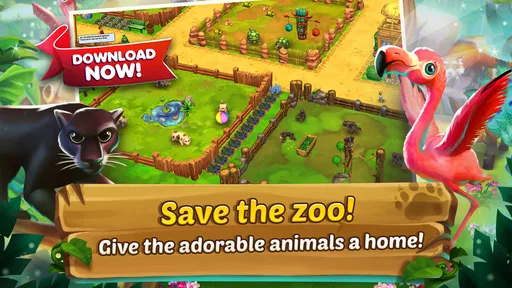
Zoo 2: Animal Park is a charming simulation game where players take on the role of a zoo director. Your mission is to rescue and expand a small zoo, caring for various animals, building habitats, and attracting visitors. With engaging storylines and vibrant graphics, it's a delightful experience for animal lovers.
Is Zoo 2: Animal Park free to play?
Yes, Zoo 2: Animal Park is free to download and play. However, it offers in-app purchases that allow players to buy in-game currency or items that can enhance gameplay. These purchases are optional, and players can enjoy the game without spending real money.
What types of animals can I care for in the game?
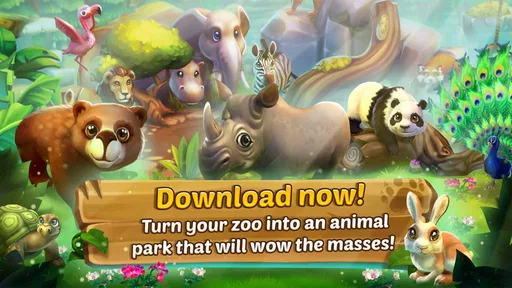
In Zoo 2: Animal Park, you can care for a wide variety of animals, from lions and elephants to penguins and exotic birds. Each animal has its own unique needs and behaviors, offering players a diverse and engaging experience as they expand their zoo.
Can I play Zoo 2: Animal Park offline?
Zoo 2: Animal Park requires an internet connection to play. This is necessary for accessing updates, events, and social features that enhance gameplay. Ensure you have a stable connection to fully enjoy the game's features and keep your zoo thriving.
How often does Zoo 2: Animal Park receive updates?
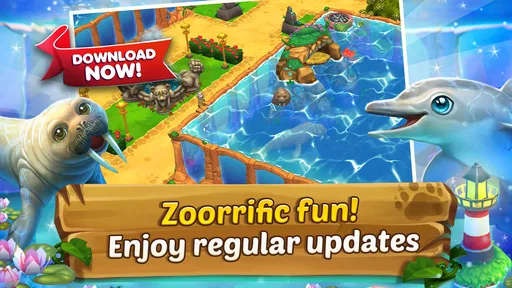
The developers regularly update Zoo 2: Animal Park with new animals, events, and features to keep the gameplay fresh and exciting. Players can expect seasonal events and new content to be added frequently, ensuring there's always something new to explore.
Play our best games!


